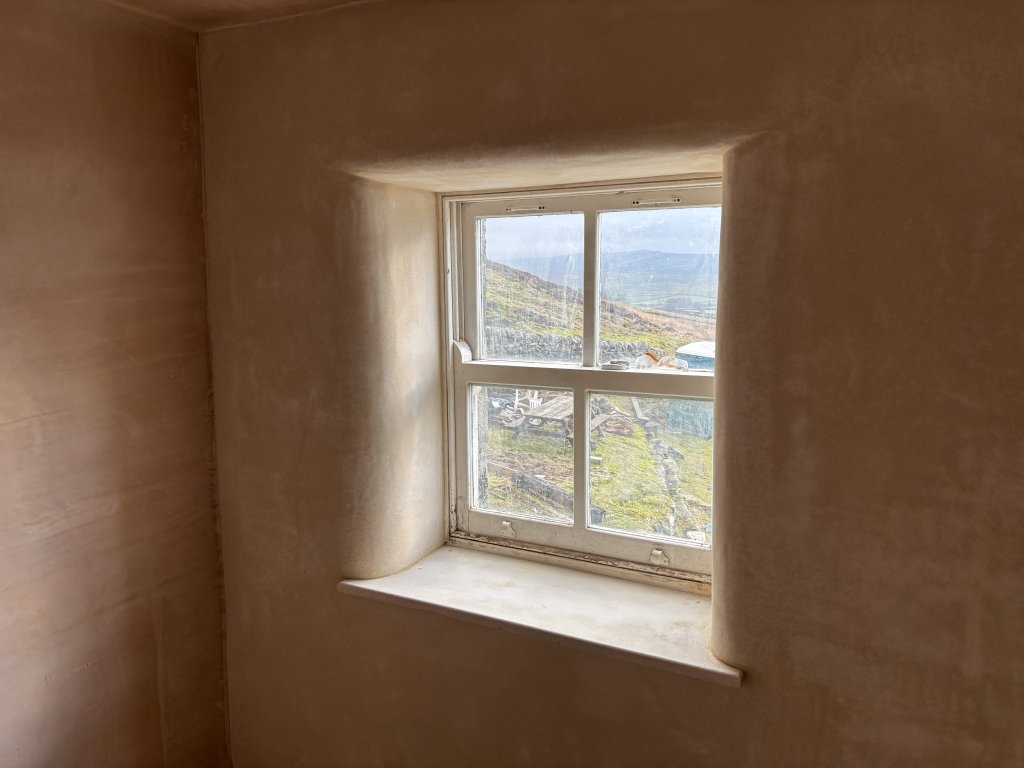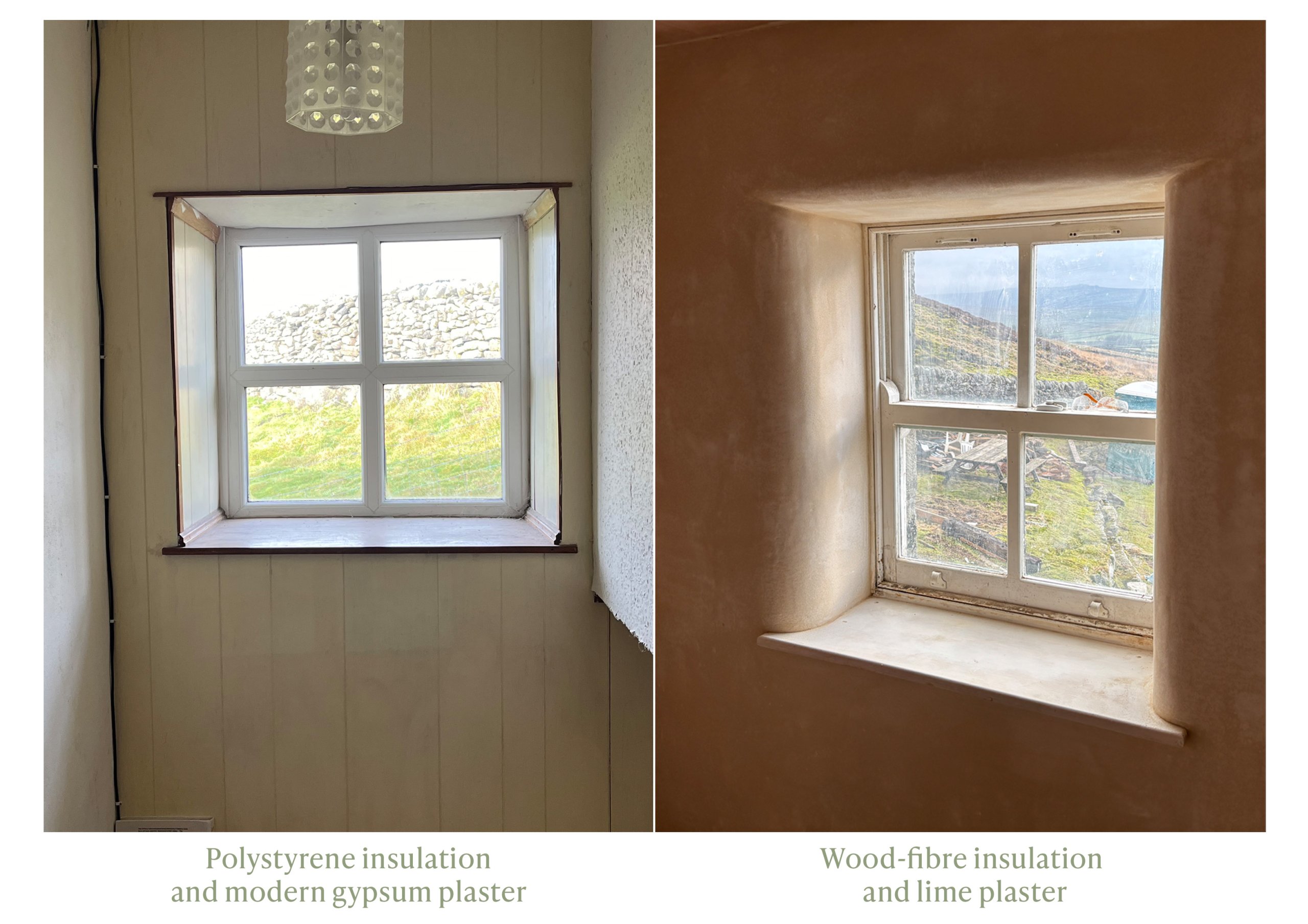
At this Yorkshire Dales barn, we specified an insulated lime plaster finish to replace polystyrene insulation products which had been causing the walls of this property to sweat for many years. This was leading to damaged finishes and an unhealthy internal air quality.
Lime plaster is the traditional wall and ceiling finish found in most UK buildings constructed before the early 20th century. Unlike modern gypsum or cement-based plasters, it is designed to work with older masonry and timber-framed buildings by allowing moisture to move through the fabric of the building rather than trapping it.
Pros and Cons
Lime plaster finishes generally take longer to apply than standard gypsum plaster finishes; lime plaster needs to be applied in multiple thin coats and requires more time to dry and cure. Unlike gypsum, which sets quickly through a chemical reaction, lime hardens gradually by absorbing carbon dioxide from the air. However, despite its more labour intensive application process, it offers several important benefits for historic buildings:
- Breathability: It allows moisture to evaporate through the wall, helping reduce damp problems.
- Flexibility: It can accommodate small movements in older buildings without cracking as readily as rigid cement plasters.
- Compatibility: It bonds well with traditional stone, brick, cob, wattle and daub, and timber lath.
- Repairability: Damaged areas can often be patched without replacing entire walls.
- Historic authenticity: It preserves the character and performance of listed and period buildings.
The process of creating a lime plaster finish:
- Remove all of the existing finishes back to the internal face of the solid stone masonry external walls and consolidate the existing masonry using a pre-mixed lime mortar.
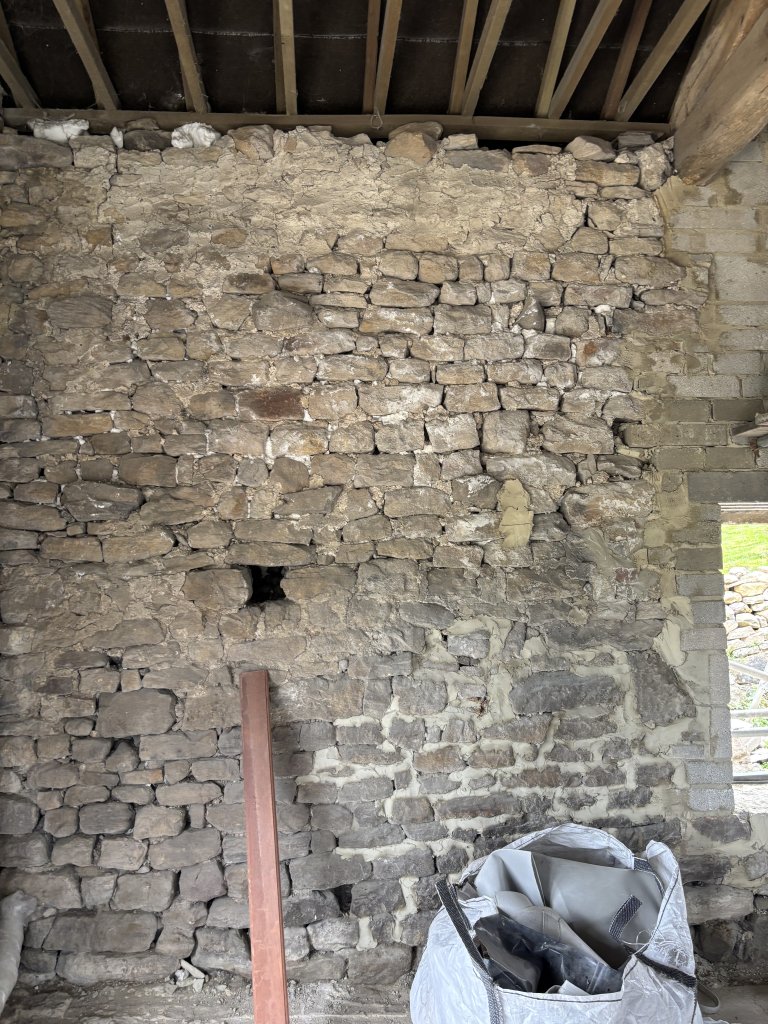
- Apply around 80mm of an insulating lime plaster in layers not exceeding 50mm in each layer. This build up is then allowed to fully dry for many weeks.
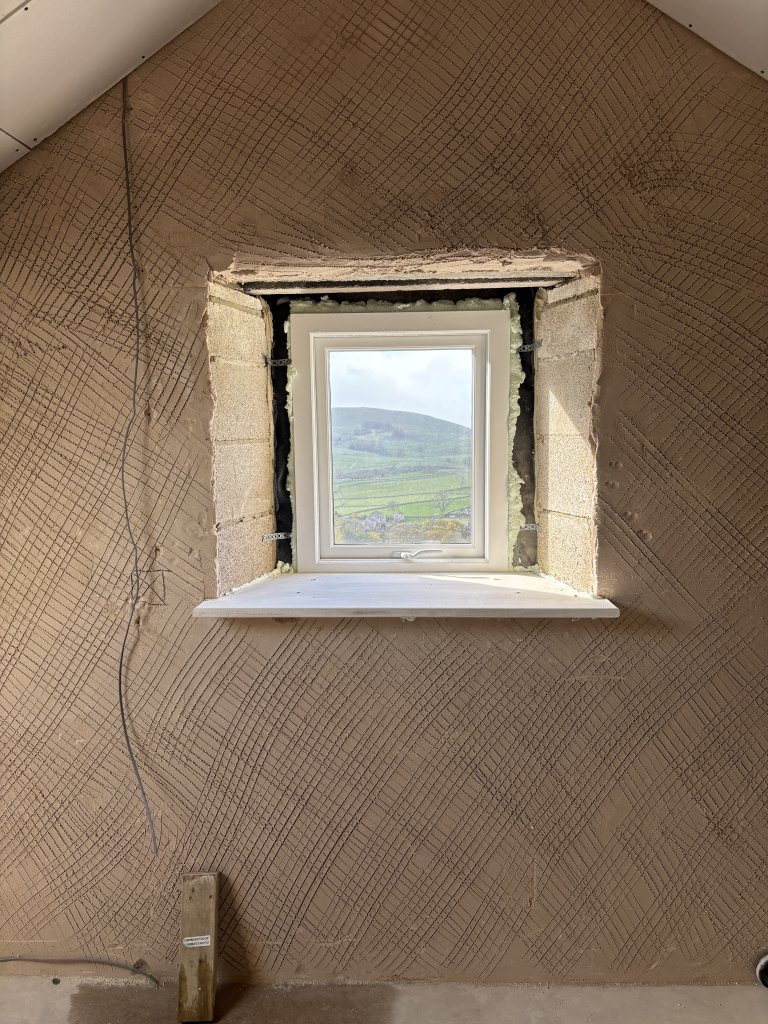
- Face the insulating lime plaster layer with 40mm semi rigid wood-fibre insulation boards, mechanically fixed through the insulating lime plaster.
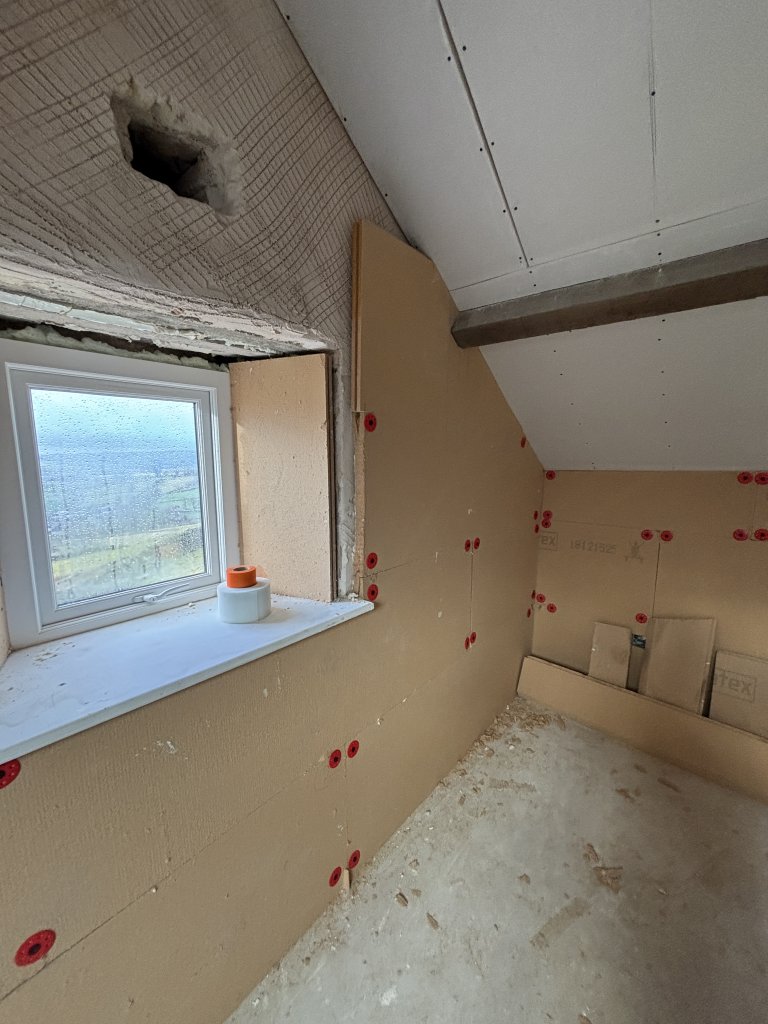
- Apply a finishing coat of lime plaster (approximately 6-8mm) and apply a sponge finish to an approved sample to provide a finish suitable for painting with a breathable paint.